

 English
 русский
 Français
 Español
 Deutsch
 عربى


Product Features Behind Modern Sensory Toy Development The toy market continues to expand toward products that combine visual creativity with interact...
READ MORENews

PU Slow Rising Toy Rebound Speed Tracks Foam Density
 2026.10.16
 Industry News
Squeeze two foam toys that look nearly identical and one springs back in under a second while the other takes several seconds to recover. That gap rarely comes from the mold or the paint. A PU Slow Rising Toy gets its rebound timing from the foam itself, and Jinhua Donghong Arts & Crafts Co., Ltd. in Jinhua, Zhejiang, treats that timing as something set during curing rather than adjusted afterward.
What Slows the Rebound Down
Ordinary PU foam is elastic and returns to shape almost at once. Slow-rebound foam is viscoelastic: the polymer chains move sluggishly at room temperature, because its glass transition sits close to the range where people handle the product. Cell structure adds a second effect. Fine cells with restricted airflow make the foam draw air back in slowly, which stretches the recovery further. A PU Slow Rising Toy therefore owes its feel to polymer chemistry and cell structure together, and density alone does not explain it.
Density Is a Range
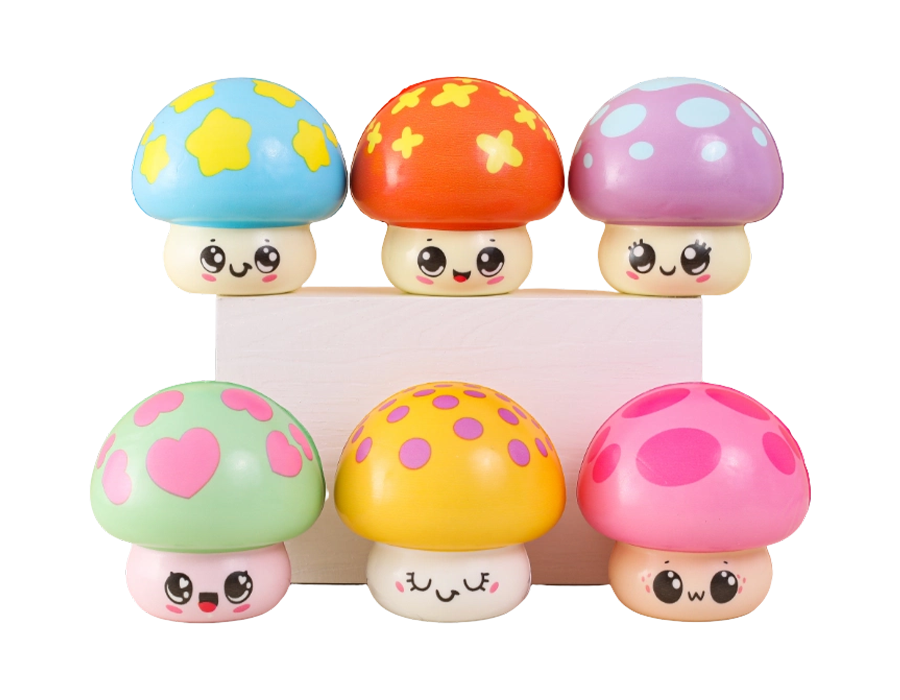
Memory foam in mattresses is a useful reference point: it commonly runs from about 40 to 80 kg/m³, and the denser grades recover more slowly. Toy foam is formulated differently, and the density range used for each toy theme can be confirmed with the factory before ordering. Within one grade, the shape of a PU Slow Rising Toy still changes the result. A thick mushroom body of 60 mm holds far more foam to re-inflate than a 15 mm sushi slice, so the mushroom takes longer to show full recovery even at the same formulation. A PU Slow Rising Toy line across several themes usually needs density adjusted per shape for this reason.
Temperature Moves the Result
Because the foam is viscoelastic, temperature changes recovery time more than people expect. Near a cold window in winter, a foam that recovers in about 3 seconds at 25°C can take several times longer at 10°C, and a warm hand or a sunny shelf shortens it again. A PU Slow Rising Toy shipped into a cold-climate market in winter feels slower than the sample tested indoors, and this is normal behavior of the material rather than a defect.
A Simple Way to Measure Recovery
Slow rebound is easier to judge when measured. A repeatable test needs only a ruler, a flat weight, and a stopwatch.
| Test Condition | Typical Setting | Purpose |
|---|---|---|
| Room temperature | 23°C, a common laboratory standard | Removes weather from the result |
| Compression | 50% of original thickness | Same strain on every shape |
| Hold time | 10 seconds | Lets the foam settle |
| Recovery mark | 95% of original height | Defines "fully recovered" |
| Repeats | 5 cycles | Shows consistency |
A PU Slow Rising Toy that passes such a test gives the same recovery time on the fifth press as on the opening press, and a result that drifts points to uneven foam. The recovery times of each theme can be confirmed with the factory before ordering.
Fine Detail Makes Density Harder to Hold
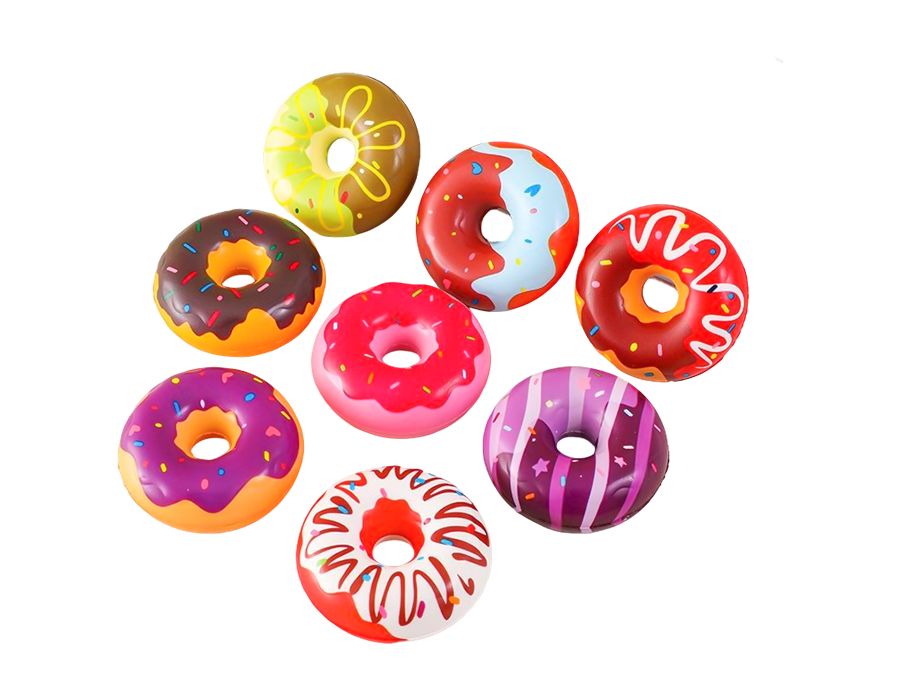
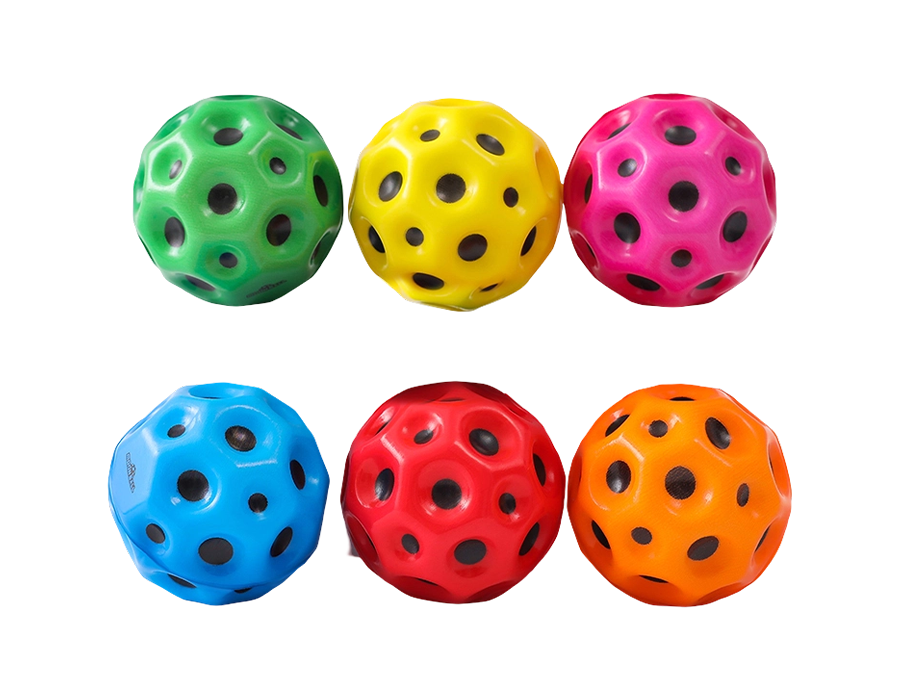
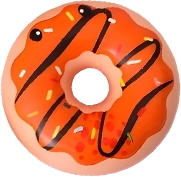
Molds with a spiral texture on a donut or ridges on a mushroom cap create thin and thick zones within one piece. The viscoelastic foam in a thin ridge cures faster and can end up denser than foam in the body, so a ridge may rebound at a different speed from the surface beside it. The effect shows after repeated pressing, because the thin zone settles back sooner and the toy appears to rise unevenly. Tighter control of mold temperature and pour amount reduces the difference. A PU Slow Rising Toy with intricate surface texture depends on that control more than a smooth ball does.
Shape Changes the Feel
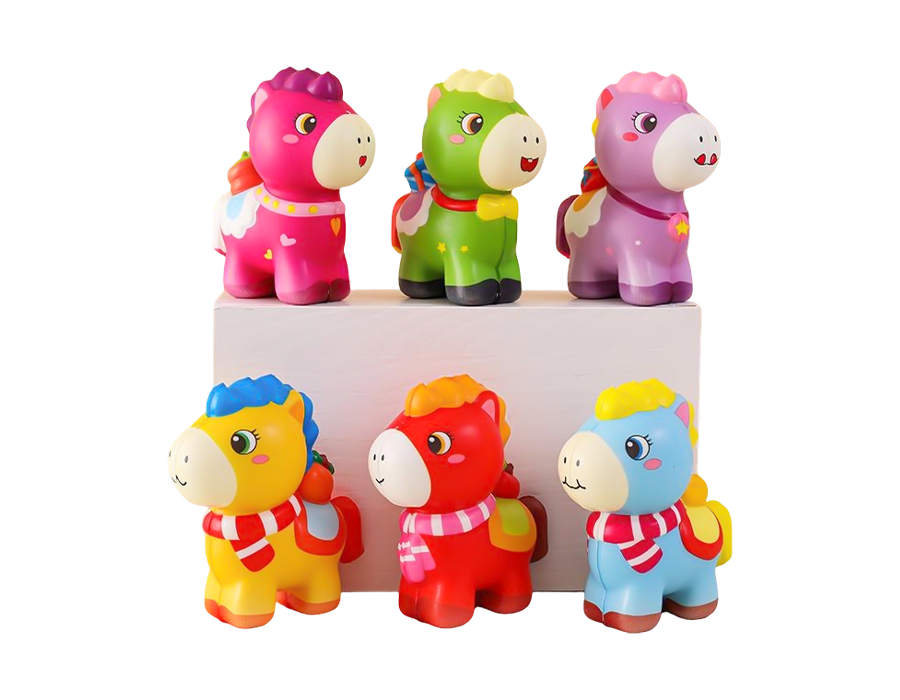
Wall thickness explains why one catalog can contain very different rebound feels. A flat pony with thin edges and a thick center recovers its edges quickly and its center slowly, so the shape appears to open from the outside in. A donut ring has a similar section all the way around and rises evenly. A small thin piece recovers in a few seconds, while a large animal shape takes longer and gives the slow, visible swelling that fidget users look for. A PU Slow Rising Toy in a thick figure suits that slow experience, and a thin piece suits quick, light play.
Why Recovery Time Matters in Use
A sensory or fidget item is judged by how it feels for the ten seconds after a squeeze. A rebound that stays steady across a whole batch produces fewer complaints than a color or print variation does, because the slow rise is the feature the user bought. For this reason a PU Slow Rising Toy is better described by a measured recovery time than by words like "slow" or "soft".
News
-
-
A PU Squeeze Rebound Toy Ball combines two physical experiences that are often developed separately: compression and rebound. When the ball is squeeze...
READ MORE -
PU Toys are becoming increasingly diverse as manufacturers use the material’s adjustable physical properties to develop different shapes, textures, an...
READ MORE -
The demand for sensory toys is expanding from traditional children’s products into wider markets such as promotional gifts, educational products, and ...
READ MORE


Stay In Touch
No. 1558, Guangshun South Street, Xiaoshun Town, Jinyi New District, ZhejiangProvince, China
+86-18170152778
Copyright © Jinhua Donghong Arts & Crafts Co., Ltd.
