

 English
 русский
 Français
 Español
 Deutsch
 عربى

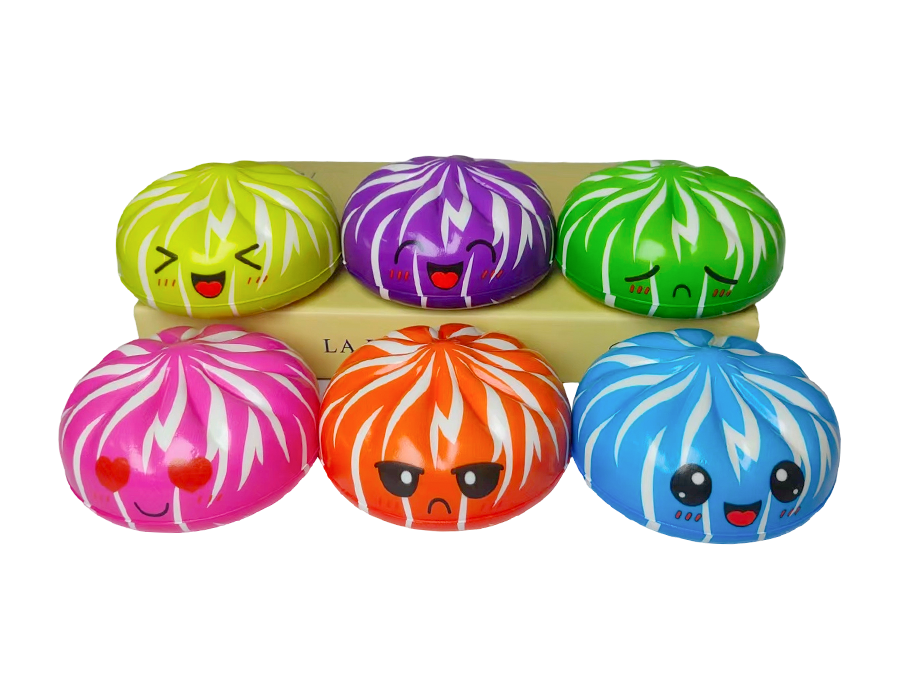
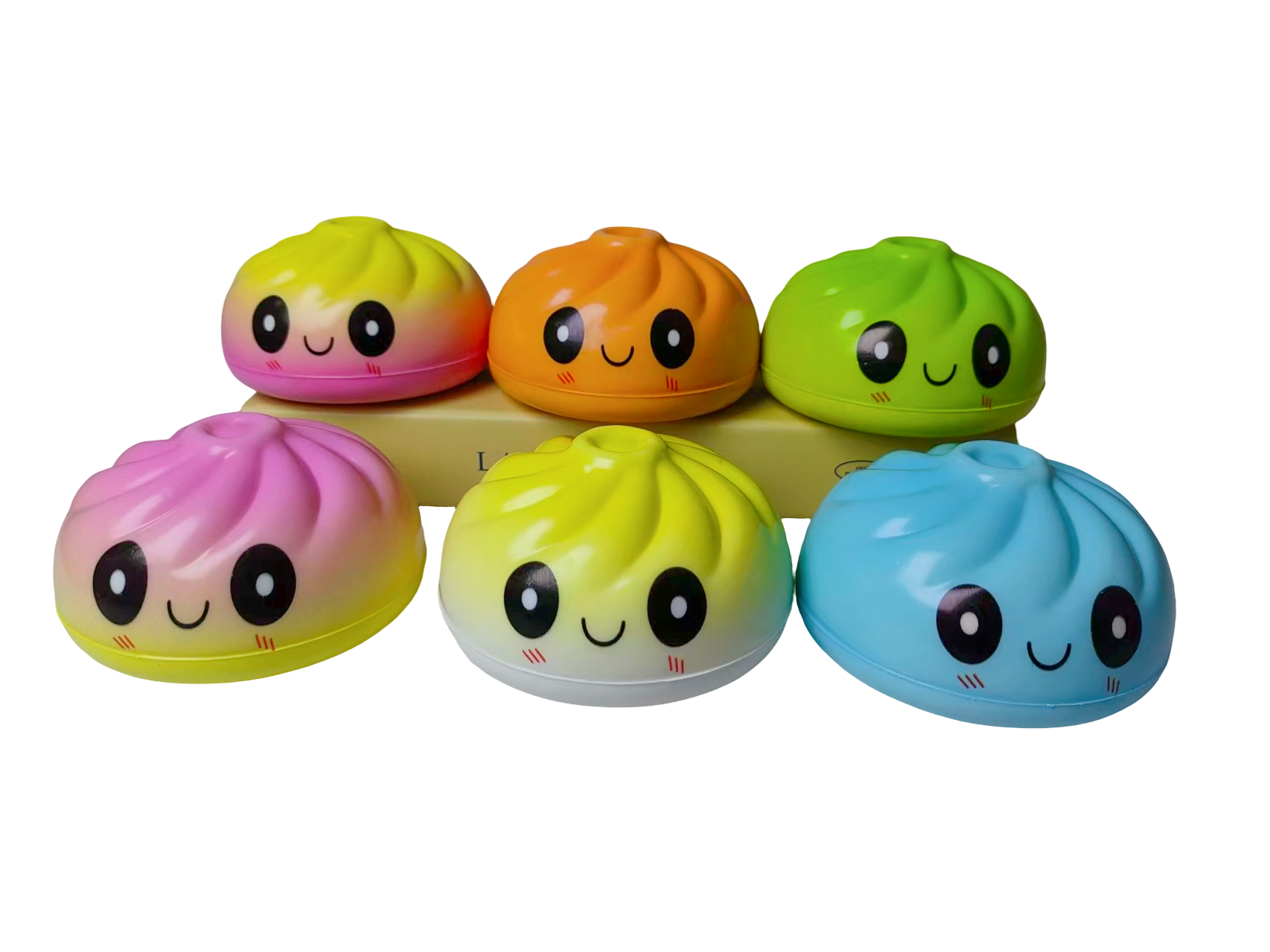
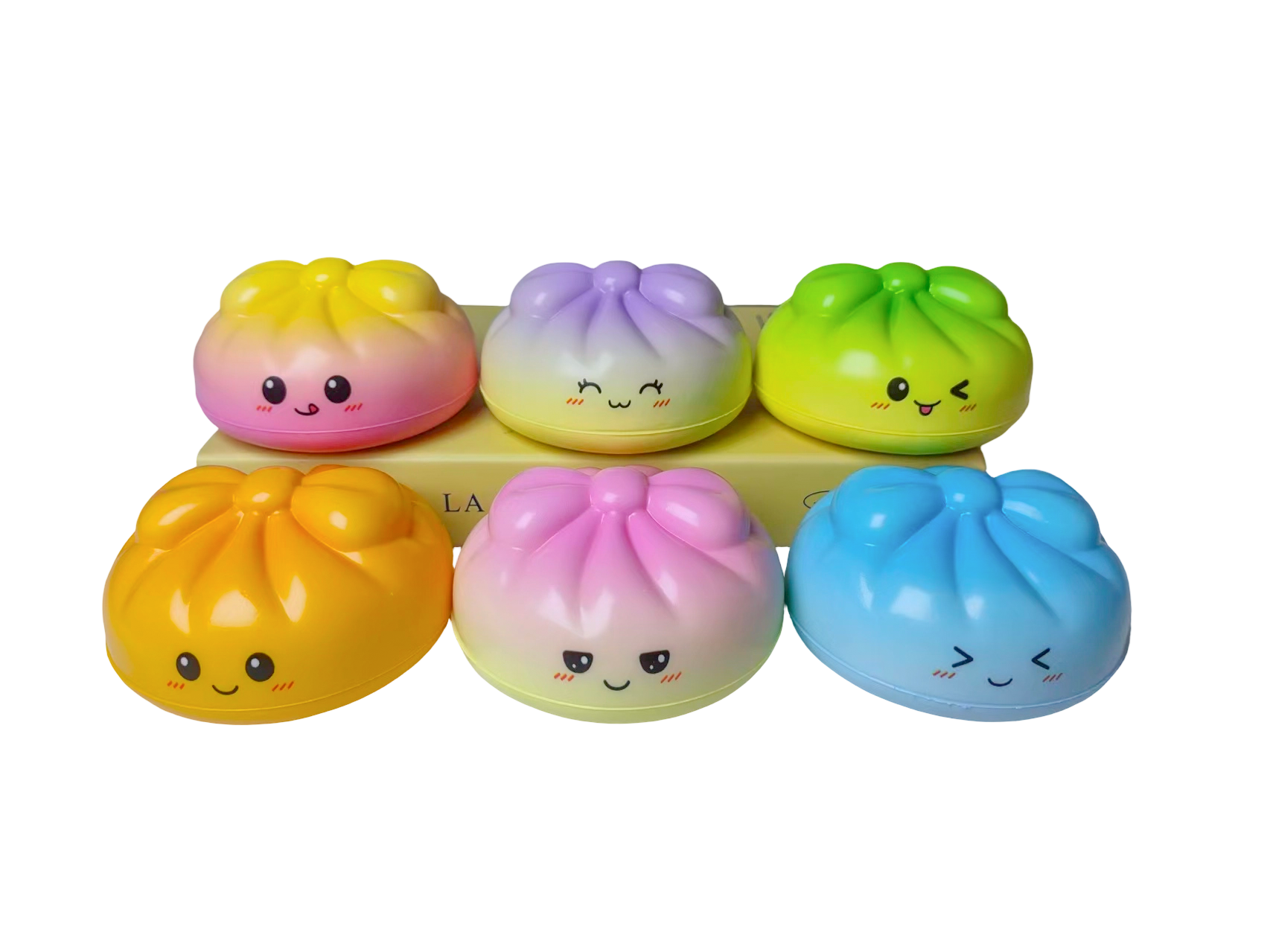
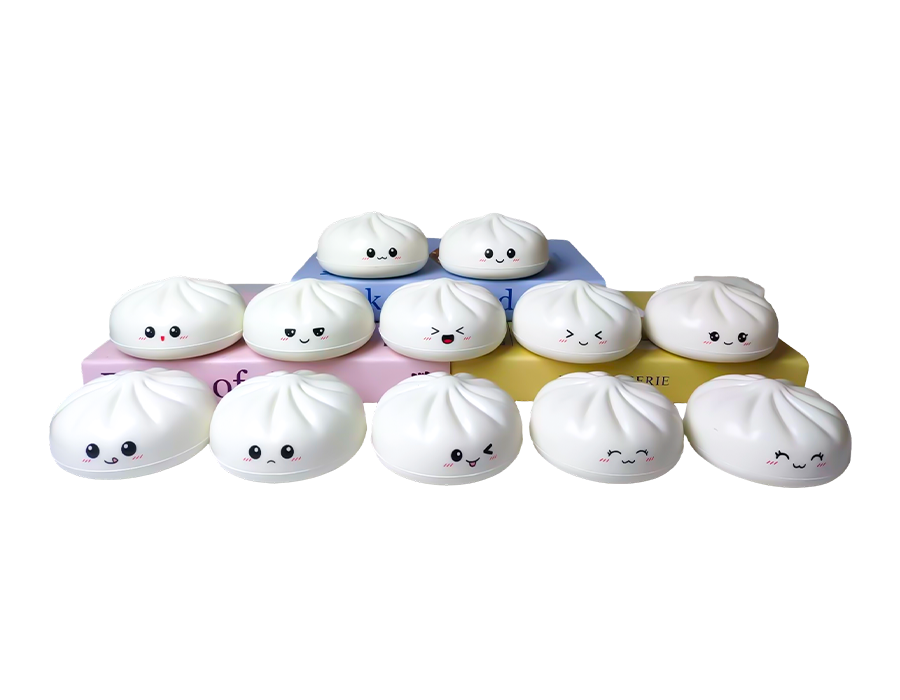
The demand for sensory toys is expanding from traditional children’s products into wider markets such as promotional gifts, educational products, and ...
READ MORENews

Custom Logo Stress Squishy Printing Starts with Surface Prep
 2026.10.02
 Industry News
A logo printed on a hard plastic surface and a logo printed on a squeezable foam surface are not solved by the same production step. Foam flexes under a hand grip, stretches slightly at the edges, and compresses unevenly across a molded shape, so a custom logo stress squishy has to carry its branding through repeated deformation rather than sitting on a fixed, rigid surface.
Why Surface Texture Changes the Printing Method
Silk screen printing lays ink directly onto a flat or gently curved surface and works well where the squishy shape stays relatively even, while heat transfer printing bonds a pre-printed film to the surface under controlled temperature, which tends to hold detail better on shapes with more contour. A custom logo stress squishy with rounded or irregular geometry generally suits heat transfer printing more than silk screen, since the film can be shaped to the mold before bonding rather than applied to a surface that will distort once the toy is squeezed.
What Happens to Ink Under Repeated Compression
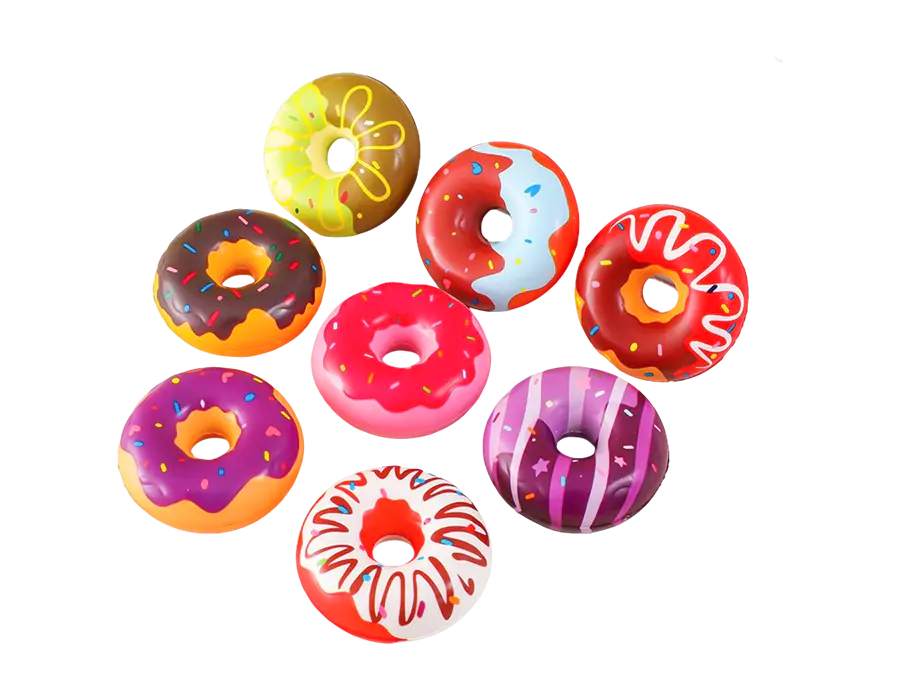
Ink that sits rigidly on top of a flexible surface tends to crack along the flex lines after enough squeeze cycles, which is a known failure point buyers should ask suppliers about directly rather than assume is solved by default. Manufacturers producing a custom logo stress squishy at scale generally test ink adhesion through repeated compression cycles before confirming a printing method for a given mold shape, since a logo that looks correct on day one but flakes within weeks of handling creates returns rather than repeat orders. Buyers who skip this question at the sampling stage often discover the issue only after a custom logo stress squishy shipment has already reached retail shelves.
Color Matching Across a Production Run
Pantone-matched inks are standard practice for brand logo work, but achieving a consistent color across hundreds or thousands of units depends on batch-to-batch ink mixing control at the factory, not just the initial approved sample. A custom logo stress squishy order spanning multiple production batches can drift slightly in color if mixing procedures are not documented and repeated precisely, which is one of the quality control points distributors and brand buyers typically request confirmation on before placing a bulk order. Some buyers ask for a retained physical color reference from the approved sample specifically so later batches can be checked against it rather than against a digital proof alone, since screen colors and molded PU colors do not always match exactly.
Where Logo Placement Interacts with Molding
Placing a logo near a seam line, a molded crease, or an area that stretches significantly during squeezing raises the risk of print distortion compared with placing it on a flatter, more stable section of the toy. Designers working on a custom logo stress squishy generally review the mold's flex map before finalizing artwork placement, since a logo positioned on a high-stretch zone can visibly warp the moment a customer squeezes the toy, regardless of how well the ink itself adheres. Getting this review done ahead of tooling saves a reprint cycle later, since a custom logo stress squishy mold is not cheap to revise once cut.
Material Behind the Print
The base material matters as much as the printing method. Slow-rebound PU foam used across this product category is generally odor-free and produced to comply with relevant children's product safety standards, which factors into logo placement decisions too — some ink formulations interact differently with PU surfaces than with rubber or vinyl, affecting both adhesion and long-term flexibility.
What Buyers Typically Compare
For brands and distributors sourcing this category, useful comparison points include the printing method offered for a given mold shape, documented ink adhesion testing under repeated compression, color-matching procedures across production batches, and minimum order quantities relative to the number of logo colors requested. Jinhua Donghong Arts & Crafts Co., Ltd., based in Xiaoshun Town, Jinyi New District, Zhejiang, produces a custom logo stress squishy line through an OEM/ODM process that includes sample approval before bulk production, supported by a production team of over 100 people and testing documentation aligned with relevant children's product certification requirements. Buyers coordinating multi-SKU orders with several logo variants can request sample approval on each mold shape separately, since ink behavior on a flat surface does not always predict how the same ink performs on a heavily contoured one.
News
-
-
A flat yellow block never passes for butter, and a buyer can tell within seconds of picking it up. At Jinhua Donghong Arts & Crafts in Xiaoshun To...
READ MORE -
Manufacturing Steps Behind Creative Functional Toy Pens Creative stationery products require a combination of practical functions, attractive design, ...
READ MORE -
Understanding Buyer Requirements for Star Stress Relief Ball When sourcing sensory toys for retail, promotional campaigns, or gift collections, buyers...
READ MORE


Stay In Touch
No. 1558, Guangshun South Street, Xiaoshun Town, Jinyi New District, ZhejiangProvince, China
+86-18170152778
Copyright © Jinhua Donghong Arts & Crafts Co., Ltd.
