

 English
 русский
 Français
 Español
 Deutsch
 عربى

News

Can Child-Friendly Outdoor Flying Discs Reduce Impact Risk?
 2026.10.23
 Industry News
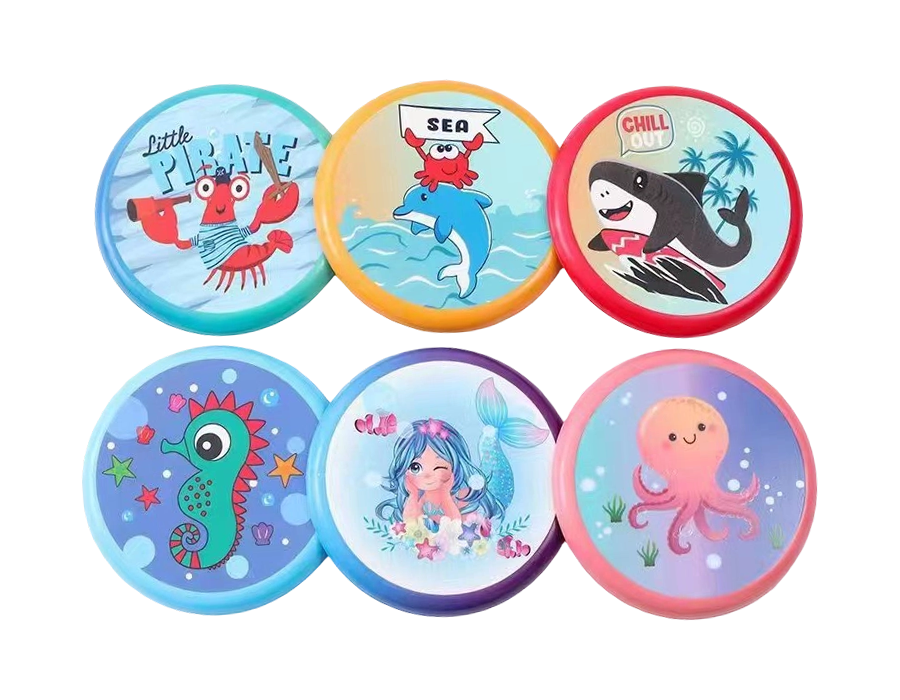
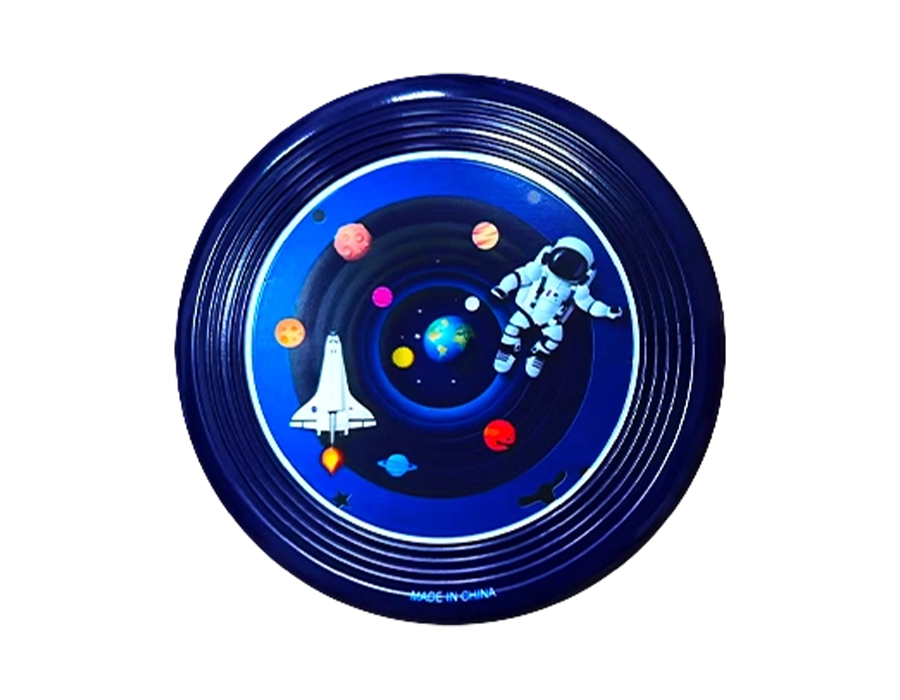
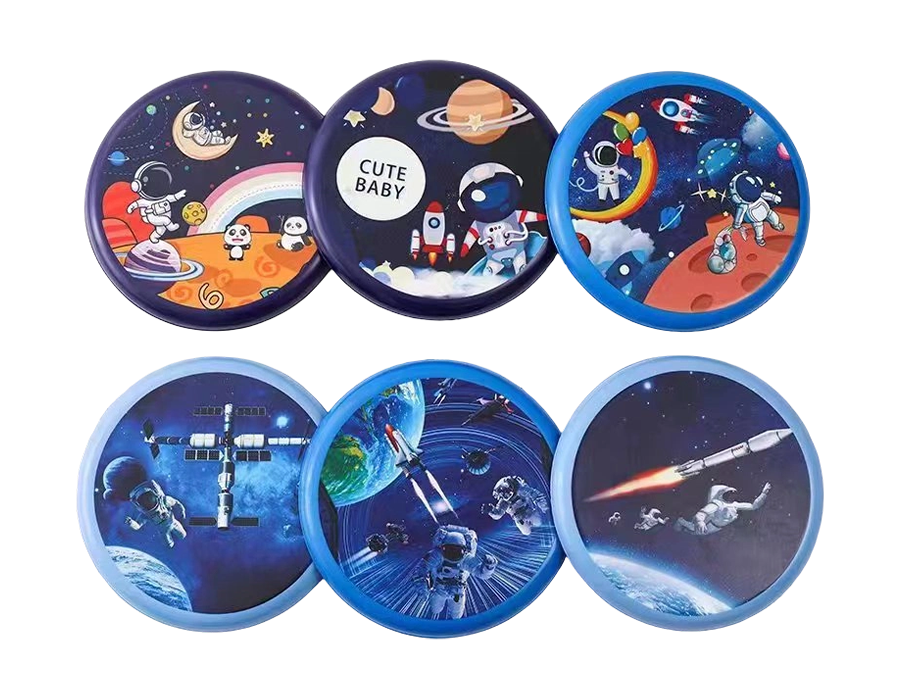
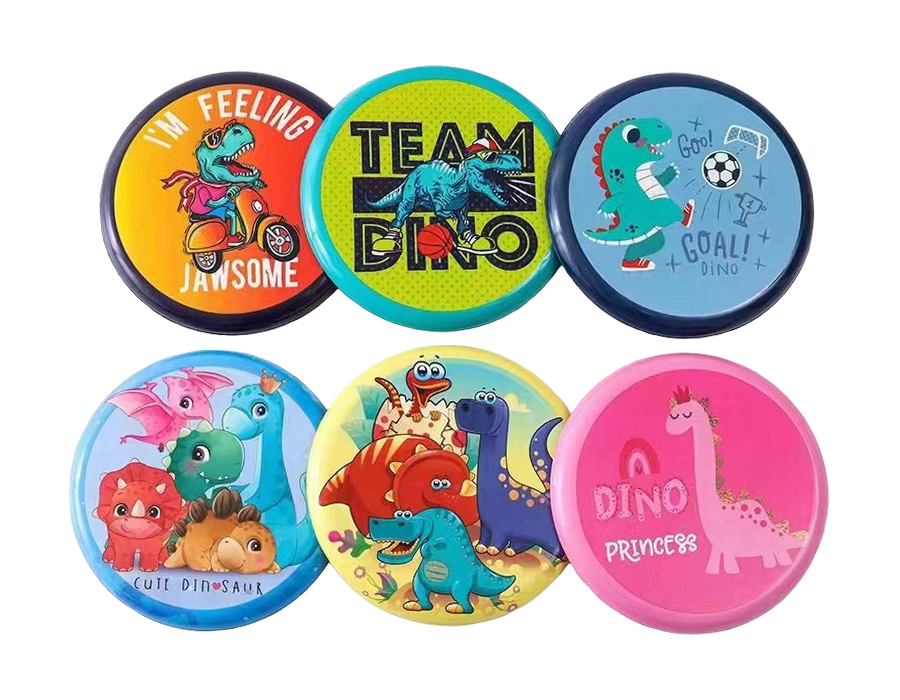
A disc thrown across a schoolyard reaches the face or hands of a child faster than people expect, and the edge is the part that lands on the child. Child-Friendly Outdoor Flying Discs answer that problem through soft materials, a rounded rim, and a lower weight than the rigid discs used in league play. Jinhua Donghong Arts & Crafts Co., Ltd. in Jinhua, Zhejiang, makes Child-Friendly Outdoor Flying Discs in space, ocean, dinosaur, and racing themes with these three points in mind.
Soft Material Gives Under Contact
A competitive disc is molded from rigid high-density polyethylene (HDPE), whose edge stays firm so the disc flies straight under a hard throw. Child-Friendly Outdoor Flying Discs use TPR or TPU rubber compounds, or EVA foam, which flex when the rim meets a hand or cheek. TPR toy parts commonly fall between 40 and 70 Shore A, soft enough to dent under a thumb, while a rigid HDPE rim sits far higher on the harder Shore D scale. A rim that dents spreads the force over a longer time, so the peak load on the child's skin is lower. The exact compound and hardness of each disc can be confirmed with the factory before ordering.
The Edge Radius Changes the Pressure
Material is only half of the story, because pressure equals force divided by contact area. A thin rim of about 1 mm radius concentrates a blow on a narrow line. A rim with an edge radius of 3 mm or more spreads the same blow over a much wider strip, so the pressure drops to a fraction of the thin-rim value even when the compound is identical. For that reason, smoothing and rounding the rim after molding matters as much as the choice of rubber. Good Child-Friendly Outdoor Flying Discs also keep the edge radius consistent around the full circumference, because one sharp section undoes the rest.
Weight Cuts the Energy Behind a Throw
The standard competitive disc weighs 175 g and measures about 27 cm across. Child-Friendly Outdoor Flying Discs usually run much lighter and smaller, often in the 20 to 60 g range and 20 to 25 cm across, though sizes vary by design. Because kinetic energy equals half the mass times speed squared, weight and speed both matter, and a child throws more slowly than an adult. The table shows an illustrative calculation, not measured factory data.
| Disc Type | Mass | Throw Speed | Kinetic Energy |
|---|---|---|---|
| Competitive HDPE disc | 175 g | 20 m/s | about 35 J |
| Soft rubber children's disc | 40 g | 10 m/s | about 2 J |
| EVA foam children's disc | 20 g | 8 m/s | about 0.6 J |
The soft disc carries roughly one seventeenth of the energy of the competitive disc in this example, before the softer material and rounded rim are counted. Child-Friendly Outdoor Flying Discs therefore lower the risk through three effects working together: less energy, a softer edge, and a wider contact area.
Size Must Match the Hand
Weight is not the only variable. A light disc with an adult-sized diameter is awkward for a small child, because the fingers cannot wrap the rim, and the throw wobbles or drops. Reducing diameter along with weight keeps the grip comfortable, so a six-year-old can hold the rim and send the disc forward flat. Child-Friendly Outdoor Flying Discs in several sizes suit different age bands for this reason, and the recommended age for each size can be confirmed with the factory before ordering.
Simple Checks for Edge Softness
A flying disc can be judged without lab equipment. Pressing the rim with a thumb should leave a visible dent that recovers within a second or two. Dropping the disc flat from shoulder height onto a hard floor should not crack the rubber or split the seam. Running a fingertip around the rim should not catch on any seam ridge, and the edge radius should feel even all the way around. A disc that passes all three checks has the soft, smooth rim that Child-Friendly Outdoor Flying Discs are meant to have, and a disc that fails one is better left off the shelf.
Risk Reduction, Not Risk Removal
Child-Friendly Outdoor Flying Discs with soft materials and rounded rims lower the chance and severity of injury, but they do not remove it. A disc thrown hard from close range still stings, and a rubber disc that hits an eye can still hurt. Throwing force, distance, and supervision still count in a schoolyard, which is why the design goal is reduced risk rather than a claim of complete safety.


Stay In Touch
No. 1558, Guangshun South Street, Xiaoshun Town, Jinyi New District, ZhejiangProvince, China
+86-18170152778
